






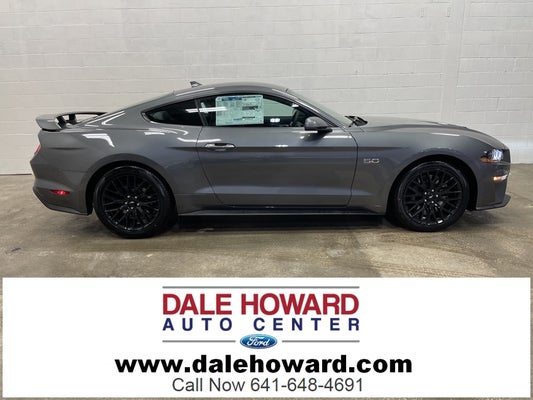
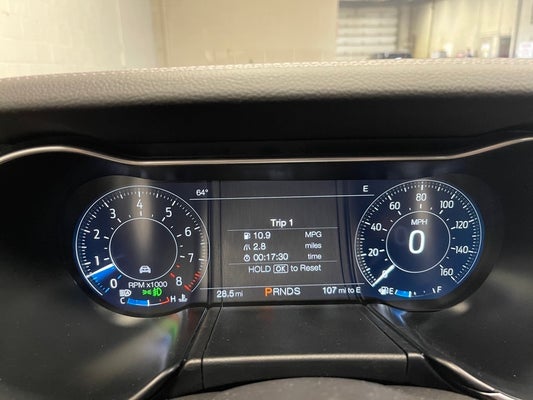
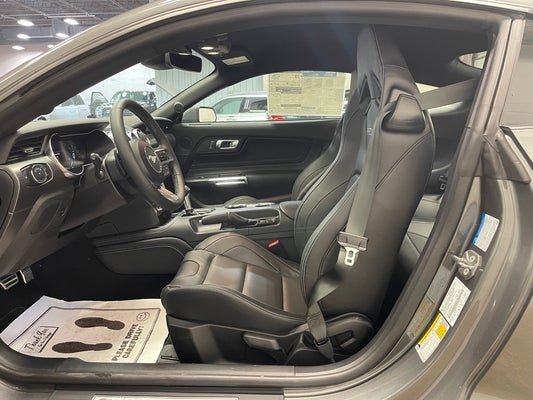
2021 Ford Mustang GT Premium
This is one sharp unit. Fresh off the truck last week, and ready for the Spring, Summer, and Fall seasons! If you are a fan of the Mustang, you really need to check out the GT Premium package. Make sure to visit the description page by clicking on the link below to see all of the options and features this vehicle has!
Mustang Video
Visit Dale Howard Details Page
Learn more
Jeep’s Hidden Easter Eggs
Jeep’s Hidden Mysteries
Did you know that Jeep has been placing tiny east eggs throughout their vehicles? If you own a Jeep, you’re going to want to check out your vehicle to see yourself. They have multiple animals, Willy’s Logos, and objects “hidden” throughout their vehicles. According to Susannah Guthrie of CarAdvice, “Jeep cars have had Easter eggs such as animal motifs or brief messages since 1996.” Not all Jeeps have these hidden mysteries so make sure to check and see for yourself! Leave us a comment below on which ones you have/found!
The Spider Easter Egg
The spider will be inside of the gas cap saying “Ciao baby”, which means “Hi” or “Hello” in Italian. Unless you clean the gas cap or inspect it thoroughly, this one is easily missed. Its a good thing this spider is fake!
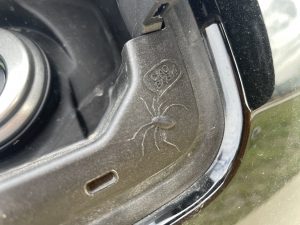
Spider with “Ciao baby”
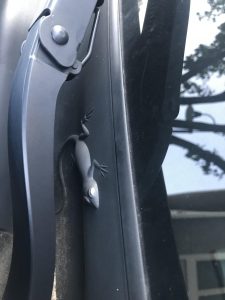
The Gecko Easter Egg
The Gecko can be found underneath or near the windshield wipers. This one might be more visible as it is one of the larger east eggs. If you have missed it, its probably because it is in a weird position to be seen directly.
Jeep Logo Easter Egg
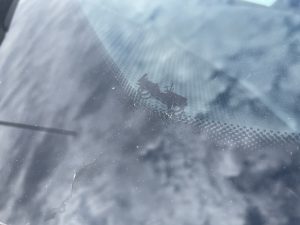
This Jeep can be found on your Jeep around the edge of the windshield. This logo can be found in multiple places, on the windshield is just one of them. Another place they can be found is on the rims. This particular Easter Egg can be found more easily.
WWII Willy’s Logo Easter Eggs
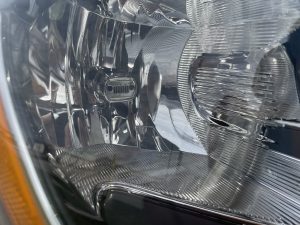
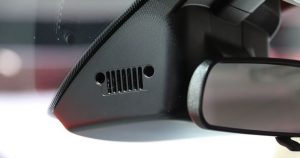
The Willy’s Jeep logo can be found in multiple places on Jeeps. One of the places you’re not going to notice them is on the head/tail lights. As you can see on the left-center of the photo you can see the Willy’s Jeep Logo. Another spot you can find them is on the rearview mirror mount.
Morse Code Easter Egg
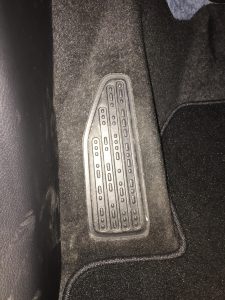
This one has to be one of the coolest Easter Eggs! It is found on the left foot rest, down by the pedals. It is actually written in Morse Code and stands for Sand, Snow, Rivers, and Rocks. Make sure to let us know by leaving a comment of all the Easter Eggs you were able to find on your Jeep!
Check out more!
Thank you for letting us help you get there!
Sources
GuthrieJournalist, Susannah, and Susannah Guthrie. “Jeep Owners Are Finally Locating the ‘Easter Eggs’ Hidden in Their Cars: CarAdvice.” CarAdvice.com, 27 May 2020, www.caradvice.com.au/852700/jeep-easter-eggs/#:~:text=Jeep%20cars%20have%20had%20Easter,grille%20in%20the%20Wrangler’s%20cowl.&text=His%20videos%20have%20received%20millions,videos%20from%20other%20Jeep%20owners.
Detailing Service
Dale Howard Auto Center Detailing Service
We have have tons of service options for your vehicle, but did you know we also offer detailing service? We have 3 different services that we provide to our customers. Those three options include different stages of cleaning that will suit your current situation. We want to make sure that if your car is shining, spotless, and looking clean! Is you schedule too busy? Try out our FREE pickup and delivery service, within 30 miles we will come pick-up and drop your vehicle off for free!
Full Detail Service
This is our most detailed package. This package includes interior and exterior cleaning. Those cleanings include, rinsing door jams, cleaning all windows, shine cleaner, cleaning the headliner, shampoo, vacuum, and waxing the exterior! This is a great service coming out of Winter, and another good option when the seasons change. You can have this full detailed service for $160, just give us a call at 641-648-4695!
Interior Detail Only
Tired of seeing dust and dirt inside your vehicle? This service is for those who are looking to shine up their vehicle on the inside. The cleaning services provided for this are clean windows, shine cleaner, clean headliner, shampoo, and a vacuum. We will make sure that your vehicle looks just the same as the first time it rolled off the lot! You can have this service scheduled for $80!
Courtesy Wash
This is our more basic cleaning which focuses both interior and exterior. Those detailing’s include rinsing of door jams, wash/rinse exterior, clean wheel rims, vacuum, and clean windows! This is a great deal at just $30! This is a great service all year around, and seems to be a fan favorite! If you have any questions for these services make sure to give our service department a call at 641-648-4695!
Contact Us!
Thank you for letting us help you get there!
YouTube Channel
Dale Howard Auto Center YouTube Channel
We indeed have a channel! Make sure to go to YouTube and check out our channel on the latest vehicle walkarounds. We also have entertaining videos of the staff taking part in competitions/challenges. Make sure not to miss out on our latest content by clicking that subscribe button! Click on “Our Channel” below to view our latest content!
Our Channel
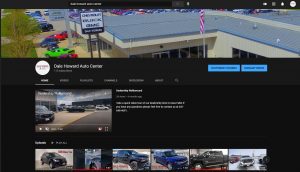
If you like any of the content make sure to give it a thumbs up and comment what you would like to see next! We are always looking for new and exciting ways to create videos. Check out our website Here and tell us which vehicle you would like to see appear in the next vehicle walkaround video.
THANK YOU!
The History of Chrysler: From The 1920s to Today!
Have you ever wondered about the history of Chrysler? Interested in learning more about this automotive manufacturer? With a history that stretches nearly a century, there’s a lot to know about it and its vehicles . If you’re looking for an auto transport company for your car, or you’re just an automotive enthusiast learn more about Chrysler here.
The Origins of Chrysler & The First Chrysler Car
Chrysler was first founded on June 6, 1925 by Walter Chrysler, when the Maxwell Motor Company was reorganized into the Chrysler Corporation.
It was originally hired to take over and overhaul Maxwell Motor Company in the early 1920s. But in January 1924, they launched the Chrysler 70, their first-ever car. This 6-cylinder vehicle was designed with advanced technology at an affordable price. Features included a high-compression engine, an oil filter, and a carburetor air filter, as well as four-wheel hydraulic brakes and rubber engine mounts.
By 1925, the Maxwell marque was dropped from the Chrysler 70 – and the company was restructured into Chrysler. By 1936, the company was second overall in US sales, and it would continue to hold this position until 1949.
1920s-1930s – Introducing Multiple Vehicle Marques & Growing Sales
Starting in the late 1920s, Chrysler introduced multiple vehicle marques to distinguish its different vehicles. This included:
- Plymouth, introduced in 1928 for the low-end market
- DeSoto, introduced in 1928 for the medium-price market
- Dodge, purchased and introduced in 1928 for both trucks and passenger cars
Later on, Chrysler would introduce even more marques – such as the luxury-focused Imperial in 1955, as well as the low-cost Valiant marque in 1960.
1930s – “Airflow” Car Models
Starting in 1934, Chrysler released the Airflow models. These cars had a unique streamlined body, and were some of the first automobiles to be designed using the principles of aerodynamics – in fact, Chrysler was the first car company to introduce wind tunnels in the testing of these cars.
However, their styling was widely rejected by customers – who began purchasing Dodge and Plymouth cars. The Chrysler Airflow model remained unpopular throughout the Depression era – but the sales of Plymouth and Dodge cars helped keep Chrysler in business throughout the 1930s.
1940s – World War II Era
During World War II, most of Chrysler’s plants were converted to making wartime goods – such as radar antennas, missiles, and military vehicles, as well as components for the Manhattan Project, the U.S. government research project that resulted in the development of the atomic bomb.
1950s – The “Forward Look” Models & Further Innovation
The failure of the Airflow models had a negative effect on Chrysler’s styling and marketing – resulting in a series of very conventional, conservative Chrysler models throughout the 1940s and 1950s.
However, by the mid-50s, things had improved thanks to the Forward Look designs of Virgil Exner. His sleek, smooth and stylish designs were very forward-thinking – and were accompanied by technological advances such as the first-ever all-transistor car radio, which was released in 1956.
Further developments during this time included the Torsion-Aire suspension and Electronic Fuel Injection, but some significant quality issues with some car models and a national recession muted their success in the late 1950s.
1960s – The Unibody Construction Era
Chrysler was one of the first auto manufacturers to switch to a unibody (monocoque) design for its passenger cars. All vehicles (except the Imperial) were made with this construction by the 1960 model year. This type of construction provided better handling, enhanced crash safety and a number of other benefits.
It was also during this time that the Valiant compact car was introduced. Among other advancements, it was the first vehicle to use an alternator instead of an electrical generator – a change that would be added to all Chrysler products in 1961.
The 1960s also heralded further improvements for their vehicles such as advanced rust-proofing – and in 1964, the Plymouth Barracuda – the first-ever “pony car” was released. During this time, it also expanded into Europe with an investment in the British Rootes Group.
1970s – Tumultuous Times for Chrysler
Like many American automakers, Chrysler struggled during the 1970s, when pollution regulations and an increased focus on fuel economy (due to the oil 1973 oil crisis) led to lower sales volumes. At the same time, the introduction of economical, fuel-efficient cars from Japan also reduced overall sales volumes.
The Chrysler Cordoba, introduced in the mid-70s, was a success for the company. However, new vehicles including the Dodge Aspen and Plymouth Volare in the 1970s were not properly tested and incurred huge warranty costs – and destroyed quite a bit of customer loyalty. To help with floundering sales, Chrysler hired legendary executive Lee Iaccocca, who was recently fired from Ford, as CEO.
1980s – The Iacocca Era
Lee Iacocca, realizing the trouble Chrysler was in, turned to Congress and secured a $1.5 billion loan in 1979. Then, development of the “K-Car” line – which would save Chrysler – began.
In 1981, the Dodge Aries and Plymouth Reliant “K-Cars” were introduced. These small, fuel-efficient, and inexpensive compact cars sold rapidly – bringing Chrysler back from the financial brink in the 1980s. The introduction of the Dodge Grand Caravan minivan was also very successful.
Later in the 1980s, Chrysler began purchasing other automotive companies – like Lamborghini (sold off again in 1994) and AMC, a purchase that brought the Jeep marque under the Chrysler corporate umbrella.
1990s – Continued Success, European Expansion
Thanks to new models like the Dodge Ram, the continuing popularity of Jeep models, and other models like the Dodge Viper sports car, Chrysler continued to succeed in the 1990s, and began expanding and setting up car production facilities in Europe. In 1998, Daimler-Benz and Chrysler formed a 50-50 partnership.
2000s – DaimlerChrysler, Financial Crisis & More
The DaimlerChrysler partnership would prove to be very successful – and by the middle of 2005, it was considered the most successful of the “Big Three” Detroit automakers. However, in 2007, a majority stake of Chrysler was sold to Cerberus Capital Management for $7.4 billion.
Then, the automotive industry crisis of 2008 began – and Chrysler faced serious questions about whether it would survive in 2009. Eventually, President George W. Bush approved a $13.4 billion “rescue loan” for major American automakers including Chrysler. The company received an extra $6 billion in support for merging with Fiat in April, 2009.
Today – Fiat Chrysler Automobiles
In April 2009, Fiat S.p.A. and Chrysler formed an alliance as Chrysler filed for Chapter 11 bankruptcy protection. By May 2011, Fiat had repaid more than $7.4 billion in government loans, and bought the shares of Chrysler held by the US Treasury – creating Fiat Chrysler Automobiles, the current incarnation of the company.
The Future – Continued Growth & Success
Today, Fiat Chrysler Automobiles (FCA) is one of the most powerful and profitable automotive groups in America and abroad.
While there is no way to know what the future holds, it seems likely that FCA will continue to thrive. Especially thanks to the popularity of the Jeep brand, and new, innovative models like the Jeep Gladiator pickup truck. Thanks for reading this brief history of Chrysler. We hope that it’s been interesting and informative, and given you a new perspective on this major US-based automaker.
Article by Jay Mueller
https://www.a1autotransport.com/chrysler/
3 Reasons to Replace Cabin Air Filters in Winter
Often driven by an “out of sight, out of mind” mentality, most consumers don’t think about purchasing cabin air filters. That’s why educating consumers on the benefits of cabin air filters can be a shop’s best sales pitch for selling these maintenance add-ons.
A recent Maintenance Matters survey found that 49% of cabin air filters are sold during the spring. Increasing pollen counts, coupled with the benefits cabin air filters provide for allergy suffers, makes for a fairly easy sell. One could argue, that winter is the more important season to replace a vehicle’s filter.
There are three major reasons to replace a cabin air filter in the winter:
1. Increased Particulate Emissions
As cars idle on cold winter mornings, the exhaust can pump out damaging emissions that are harmful to drivers’ respiratory systems. The most damaging component of tailpipe emissions are particulates. Vehicle emission particulates range in size from 2 microns to 10 microns in diameter, and can aggravate the lungs when inhaled.
A vehicle’s tailpipe particulate emissions are higher when the engine is cold. Scientists found particulate emissions increased exponentially as the temperature decreased, according to a Kansas City Light-Duty Vehicle Emissions Study. In fact, this study found that particulate emissions doubled for every 20° F temperature drop.
The one thing that can stop exhaust particulates from reaching vehicle occupants is a cabin air filter. Some cabin air filters can even stop particulates that are as small as 1 micron in diameter.
2. Defroster Performance
In the winter, the benefits of a clean air filter are easy to see. Clogged cabin air filters can restrict defroster performance, making it harder to see out the windshield. If a cabin air filter is clogged, it will create a restriction that will decrease the amount of hot air the blower can deliver to the windshield. This will diminish visibility and adds time that it takes to defrost the window.
3. Summer and Fall Can Be Brutal on Cabin Air Filters
Following months of battling heavy pollen, dust, leaves, bugs and other debris, winter is the perfect time to give a customer’s cabin air filter a fresh start.
This debris piles up, restricting airflow through the filter and causing heating and cooling problems. With no leaves, pollen or bugs to contend with over the next few months, replacing the cabin air filter in the winter will address heating problems immediately. It will ultimately help prevent cooling problems from cropping up once spring rolls around.
Crisswell, K. (2017, November 30). 3 Reasons to Replace Cabin Air Filters in Winter Retrieved from http://www.brakeandfrontend.com/
Training for Success
Training and education is an important part of the auto industry. Things are always in a constant state of change with technology advances and it is important that our staff stay as up to date and as knowledgeable as possible to serve our customers. We take pride in helping our employees reach their education goals!
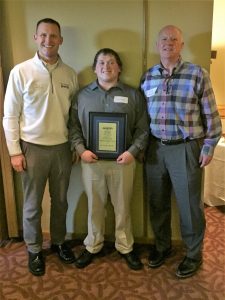
Service Technician, Levi Bahr, is a graduate of the GM ASEP program at DMACC this month. This two year training program combines state of the art automotive service, appropriate academic coursework, and real world internship experiences to give students the best possible preparation for a career as an automotive technician. The program incorporates advanced automotive technical training with a strong academic foundation of math, reading, and electronics, and both analytical and technical skills using GM products. While Levi was involved in the program, he alternated between hands on work experience at Dale Howard Auto Center, and school on a 8-12 week rotation schedule. This unbeatable combination of school and work reinforces the technical knowledge gained while in college. Upon graduation, Levi earned an Associate’s Degree in Automotive Technology, resulting in a solid education combined with invaluable work experience.
Why is this important information to our customers?
Levi has now completed all of his factory training which will help him better serve current and future GM customers.
Jim Thomson, who has 30 Years of GM Experience and is an A.S.E. Master Tech, was training Levi and a fundamental aspect to Levi’s success.
Congratulations, Levi! We are all very proud of you!
If you are interested in this program check out the link below!
https://www.dmacc.edu/programs/automotive/gm/Pages/welcome.aspx
Lease or Buy?
Wanting a different vehicle can be stressful, on top of that there is also the decision of whether to lease or buy.
Did you know there is a way to drive your new car for less money? Many of our customers in Iowa have only considered two methods for purchasing something new to drive. Paying cash or financing a portion of a new vehicle. Both are common and easy to understand but many overlook the third option of leasing their new vehicle.
As with anything new, it may sound or appear scary until you know the facts. The following information about leasing vehicles in Iowa could determine which option may be right for you.
Buying
Ownership. One of the greatest perks of buying a vehicle is claiming ownership once all payments have been made. While monthly payments are usually higher, you are paying off the entire vehicle including tax, interest and other finance charges. When you buy a vehicle, you never have to worry about driving over a set number of miles like you would with a lease.
With ownership of the vehicle, you are able to modify it in any way you would like. Leasing a vehicle will limit your ability to do this. Owning a vehicle also gives you the freedom to sell or trade at any time.
Leasing
Payments are typically lower, and you get to enjoy driving a new vehicle every few years, however, you will always have a vehicle payment. With a lease, you are more or less renting for a set amount of time. In doing this, you are not affected by vehicle depreciation. That being said, since you do not own the vehicle there are limitations to the number of miles you put on it each year. Entering into a lease often includes clauses in the contract that spell out additional charges for the vehicles “wear and tear”.
Depending on the type of lease you choose, when the term is up you walk back to the dealership and start picking a new one. You might have the option to finance the remaining value on the vehicle.
Companies like Ally are making eligible pre-owned vehicles available for lease too! With Ally Pre-Owned SmartLease℠, you are able to choose models less than 4 years old, and have fewer than 75,000 miles on them!
Conclusion
The decision to lease or buy will always depend on your personal preferences. You will need to ask yourself what your goals are. If your goal is to drive a new vehicle while minimizing your monthly costs, leasing may be a good alternative. If you want to own a vehicle someday, buying is going to be your best option.
Hello world!
Welcome to WordPress. This is your first post. Edit or delete it, then start writing!

